

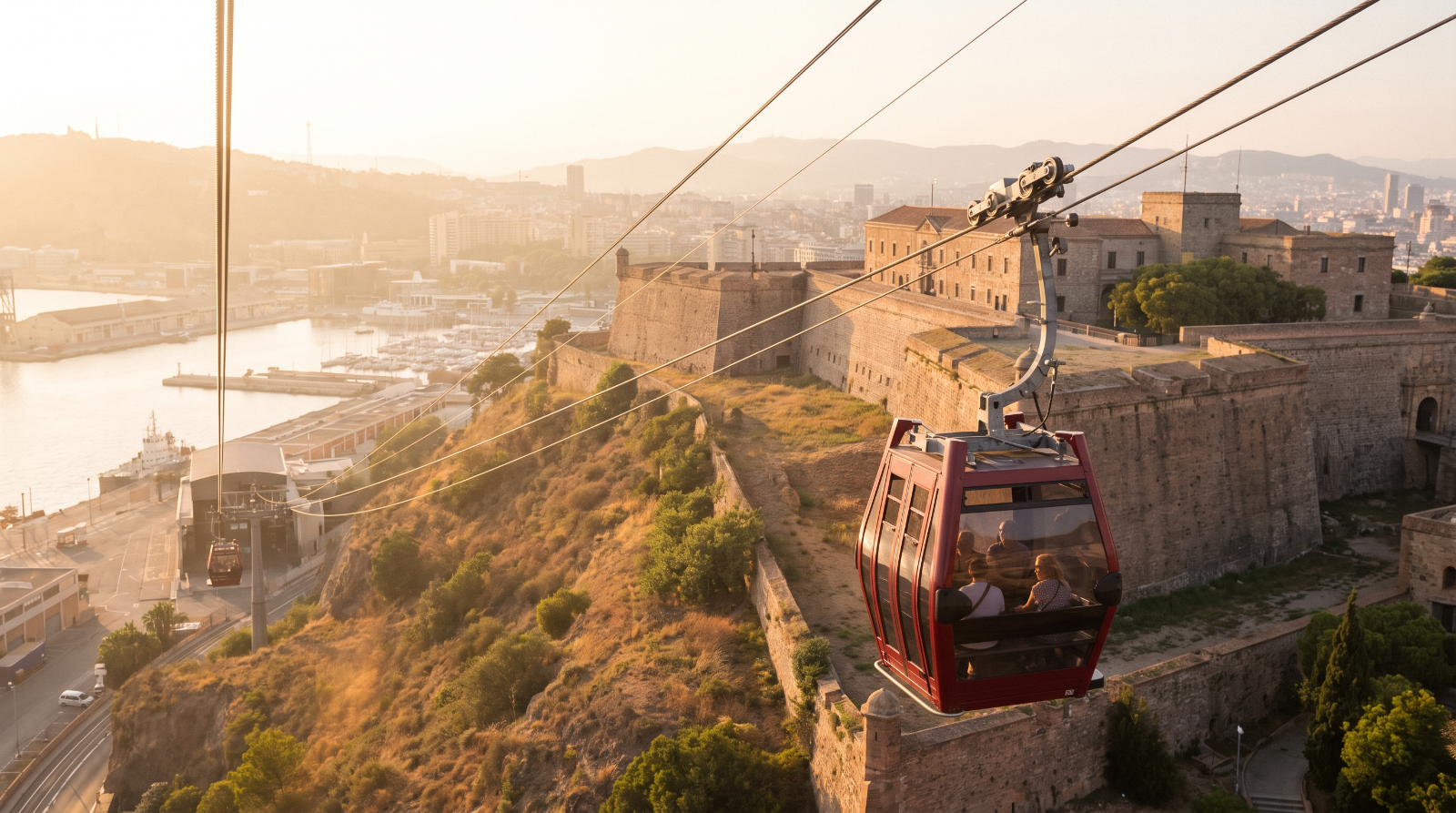
Quick answer
The Castell de Montjuïc opens daily from 10:00 to 20:00, and general admission is 12 EUR. The Telefèric de Montjuïc carries visitors up the hill to the fortress gates, so the two are best planned together. Arrive between 10:00 and 12:00 for cooler air and shorter cable car queues; summer afternoons bring the heaviest crowds.
Barcelona keeps one of its landmarks at the end of a cable ride, not a road. The montjuic cable car and castle sit at the top of a 173-metre hill, and most visitors reach the fortress by boarding an aerial gondola rather than climbing on foot. The two experiences are sold and scheduled separately, which is where planning matters. The Castell de Montjuïc is a 17th-century military fortress, first raised in 1640 and rebuilt in the following century. For generations it guarded the harbour and controlled the city below. That long defensive past explains its thick ramparts, its moat, and the wide terraces that now open to the public. History is the reason the building exists; the dedicated history section covers the darker chapters in full. For a visitor, the practical question is timing. The castle keeps the same daily hours through the week, and the Telefèric de Montjuïc runs cabins up from the hillside to the fortress gates. Because the ride and the entry answer to different clocks, it helps to confirm both before setting out. A montjuic cable car and castle guide is most useful when it lines up the opening window of the fortress with the running hours of the gondola, so no one arrives to a closed gate or a stationary cabin. What should a reader do with all this? Treat the trip as two linked bookings, not one. Decide first whether the cable car is part of the plan or simply the fastest way up, then match that choice to the castle's hours. Barcelona's hilltop landmarks reward a little sequencing. The aerial cable car ride is short, the fortress visit is longer, and the return can be timed to avoid the busiest cabins. Frame the day around those two facts and the rest falls into place. The booking pages handle tickets; this page handles the plan for the montjuic cable car and castle.
“Treat the trip as two linked bookings, not one—the ride and the fortress answer to different clocks.”
How to Route Your Journey: Montjuic Cable Car and Castle
Montjuïc Castle is situated at the top of Montjuïc hill at Carretera de Montjuïc, 66, Barcelona. The most direct route involves taking the L3 metro to Paral·lel, transferring to the Funicular de Montjuïc, and boarding the cable car.
L2 or L3 to Paral·lel station
Funicular de Montjuïc to Parc de Montjuïc
Line 150 from Plaça d'Espanya to Castell de Montjuïc
Uphill paths from Poble Sec to Carretera de Montjuïc, 66
The Perfect Half-Day Route for the Montjuic Cable Car and Castle
This half-day route suits visitors who want the cable car ride paired with an unhurried castle visit, taking roughly four hours from base to descent. Plan for the 10:00–12:00 window when temperatures and lines are lowest.
Board the Montjuïc cable car
Start your ascent early to catch cooler air and a shorter queue. The ride up runs about 10 minutes to the summit station.
Walk to the castle entrance
From the upper station it is a short, mostly level walk to Carretera de Montjuïc, 66. Allow 5–10 minutes at a relaxed pace.
Enter Montjuïc Castle
Pass through the main gate and cross the central parade ground. Give yourself a moment to orient before exploring the outer walls.
Circle the ramparts and moat
Follow the perimeter walkway around the star-shaped fortress, pausing at the bastions. This loop takes 30–40 minutes on foot.
Explore the inner courtyard
Step into the central patio and surrounding chambers at your own pace. Benches here make a good spot to rest before heading down.
Stroll down to the Mayor's Lookout
Take the garden path descending toward the Mirador de l'Alcalde. The walk runs 15–20 minutes and eases you back toward the gardens below.
Tickets and Fees: Montjuic Cable Car and Castle Costs
Visiting the summit of Montjuïc involves separate fees for the historic castle and the scenic cable car ride. While the fortress charges a flat entry fee, cable car transit costs vary by passenger age and whether you select a one-way or round-trip ticket.
A typical adult visitor will pay 31.00 EUR for a round-trip cable car ride and castle entry, though choosing to walk or take the funicular one way can reduce this total.
Best Time to Visit the Montjuic Cable Car and Castle
Plan your visit between 10:00 and 12:00 to experience cooler temperatures and shorter lines at the cable car, or choose late afternoon to catch the sunset from the castle walls.
Weekday mornings
Low to moderate waiting times—
Arriving between 10:00 and 12:00 helps you beat the tour groups. The lower temperatures make walking the castle grounds comfortable.
Spring (April to May)
Moderate crowds with steady queuesMild temperatures around 12°C to 20°C
Clear spring days offer optimal visibility across the harbor and city. Crowd sizes are smaller than during the summer peak.
Summer (July to August)
High crowd levels and peak queuesHot and humid up to 30°C
The midday heat makes open-air castle exploration difficult. Plan an early morning trip or ride the cable car near sunset to stay cool.
Verdict: Visit on a Tuesday to Thursday between 10:00 and 12:00 in October for minimal queues and moderate walking temperatures.
Key Highlights Along the Cable Car Route to the Castle
The journey via the Montjuïc cable car leads directly to key landmarks of the hilltop fortress. Visitors can explore terraced gardens, expansive viewpoints, and the architectural features of the historical castle.
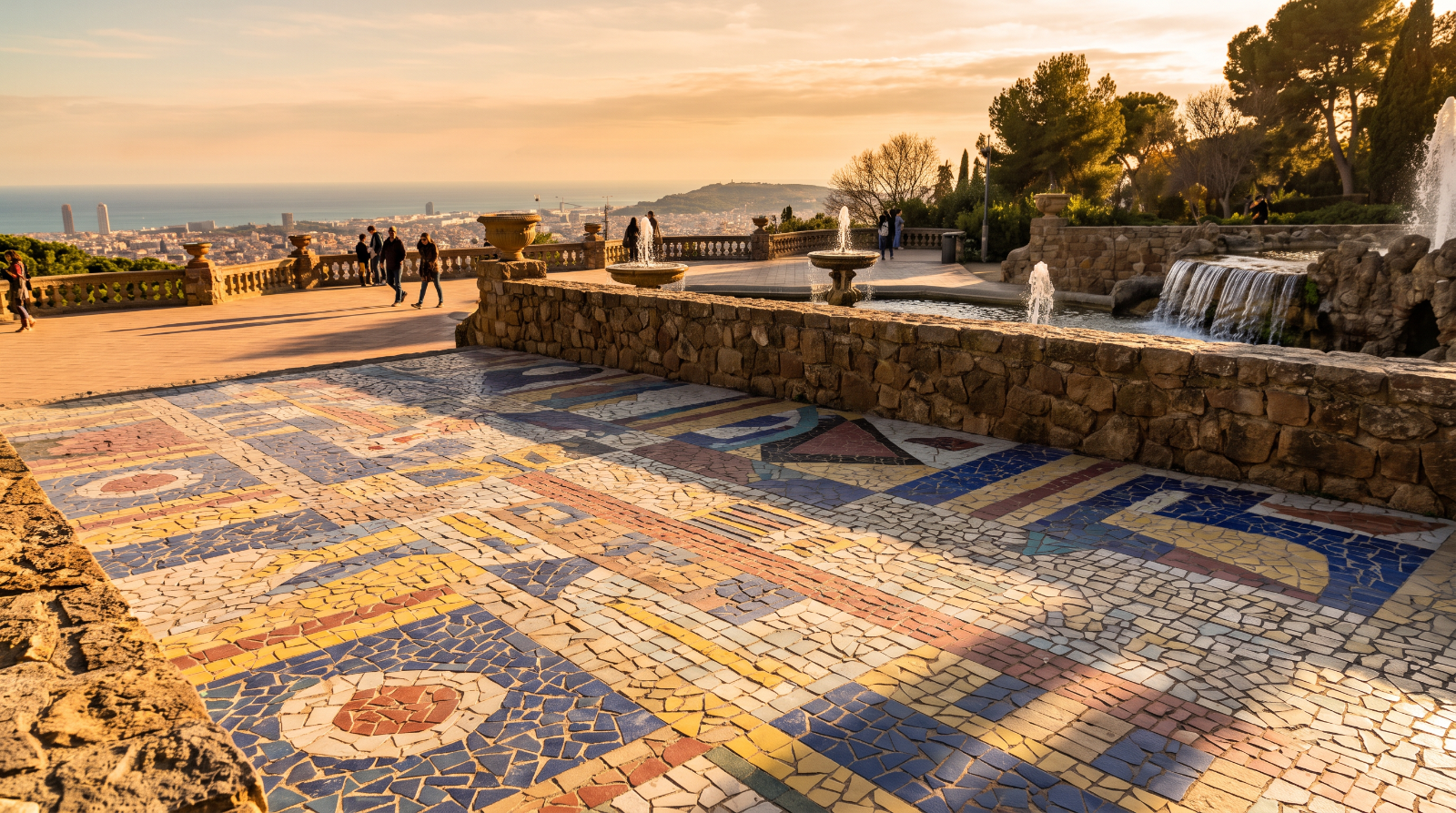
Mirador de l'Alcalde
A terraced garden lookout featuring ornamental fountains, a waterfall, and a 420-square-meter pavement mosaic by Joan-Josep Tharrats. It offers views of the city coastline.
Look down at the path to examine the colorful mosaic stones.
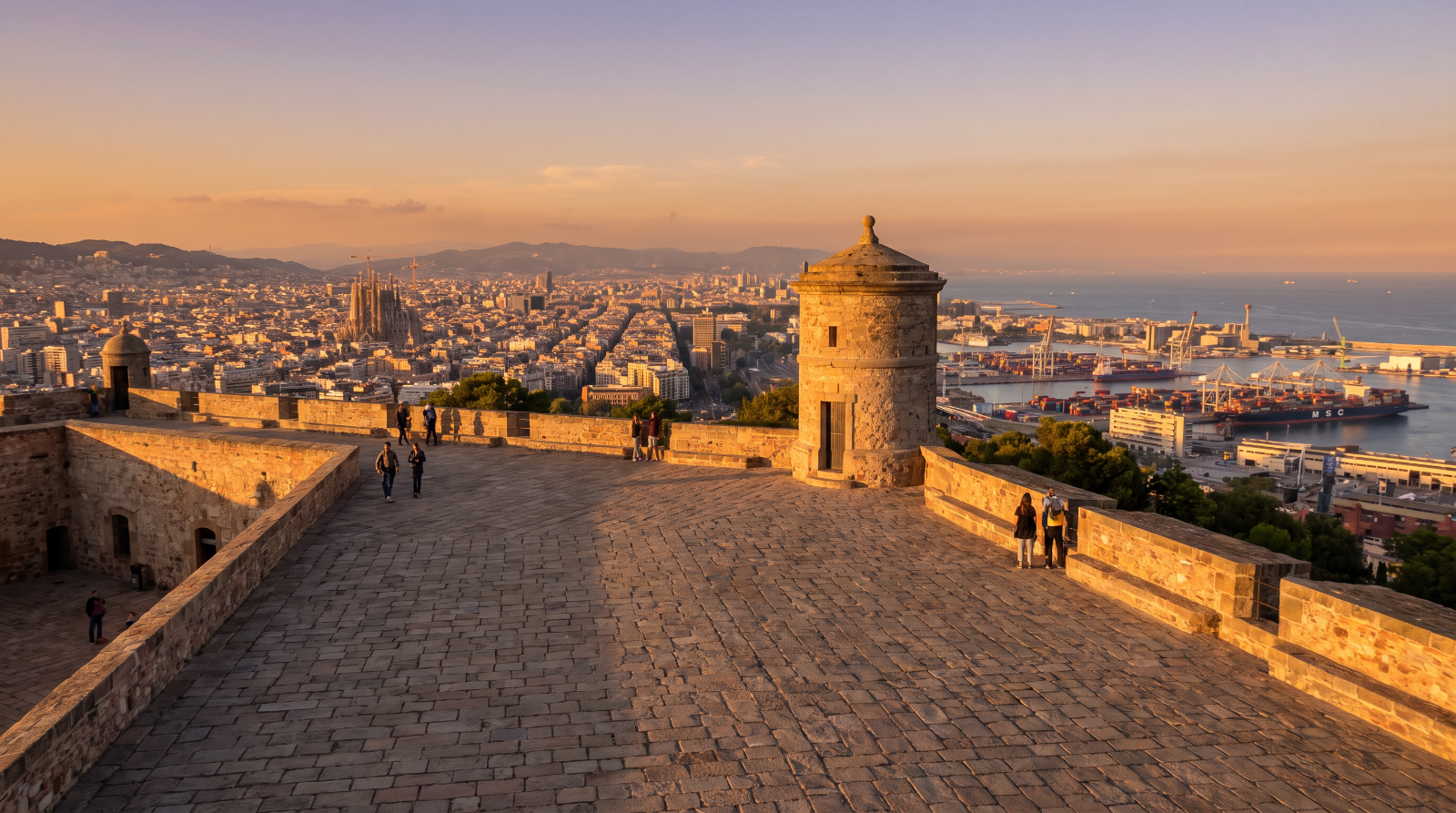
Castle Roof Terrace
Providing 360-degree views over Barcelona, the industrial port, and the Mediterranean Sea, this terrace is the highest point of the compound. Visitors can walk the perimeter walls.
Stand by the watchtower for a panoramic photograph of the harbor.
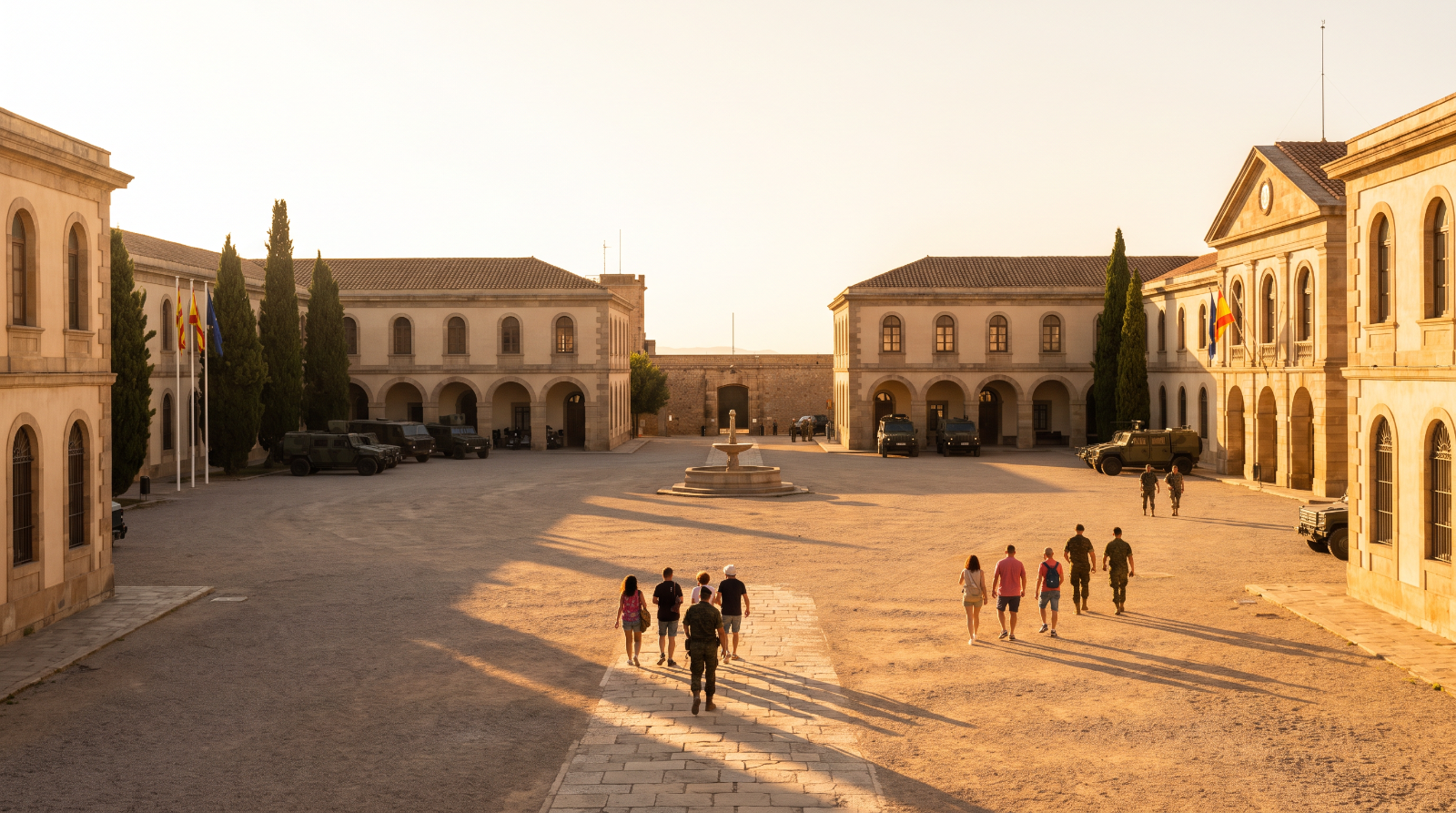
The Parade Ground
Located in the center of the fortress, this courtyard is surrounded by administrative rooms and former barracks. It displays the classic neoclassical layout of the structure.
Walk to the center to observe how sound carries across the courtyard.
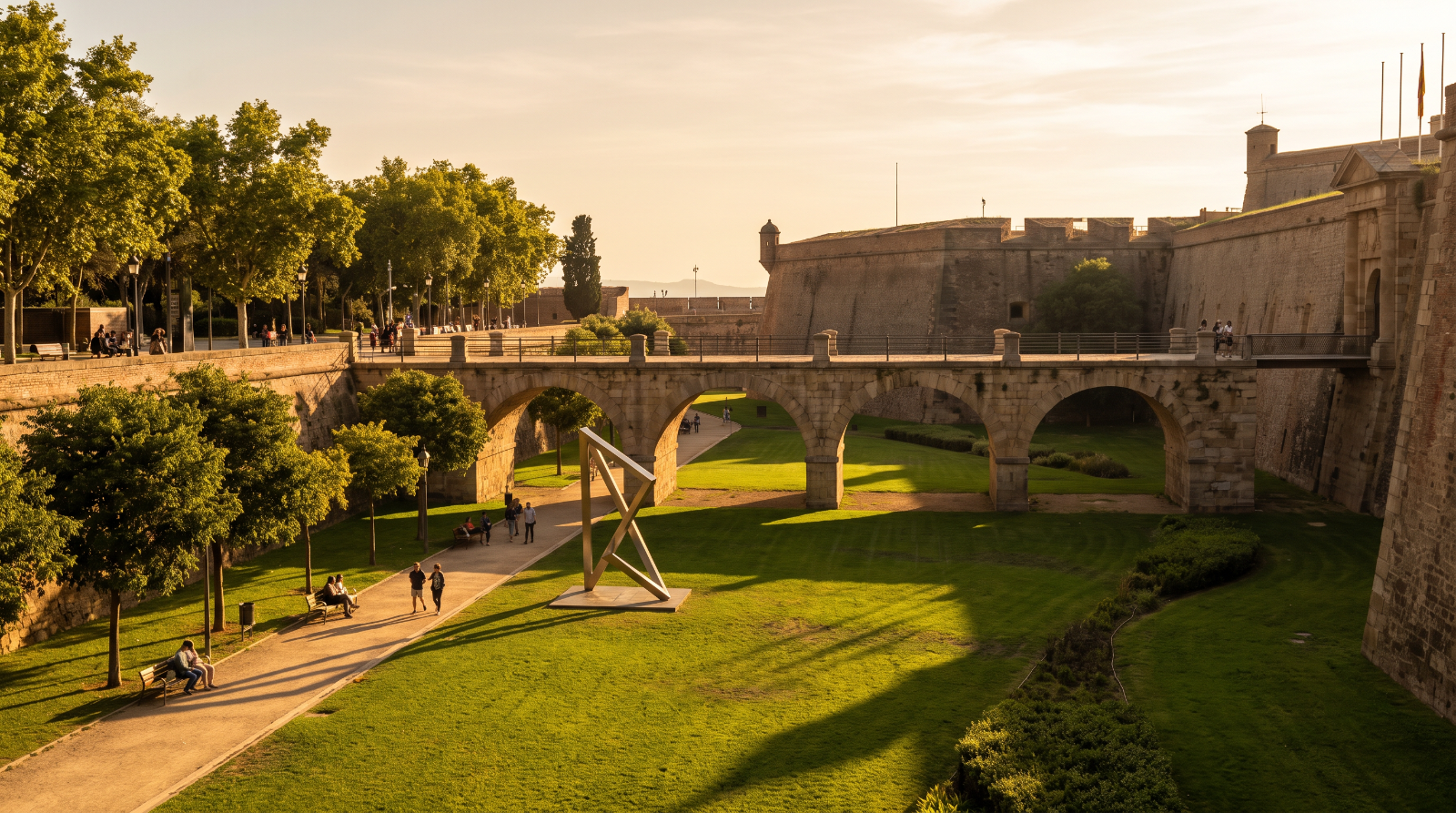
The Moat and Gardens
This dry moat has been transformed into a public garden. It features lawns, tree-lined walking paths, and a sculpture dedicated to the definition of the meter.
Walk along the bridge to look down into the landscaped ditch.
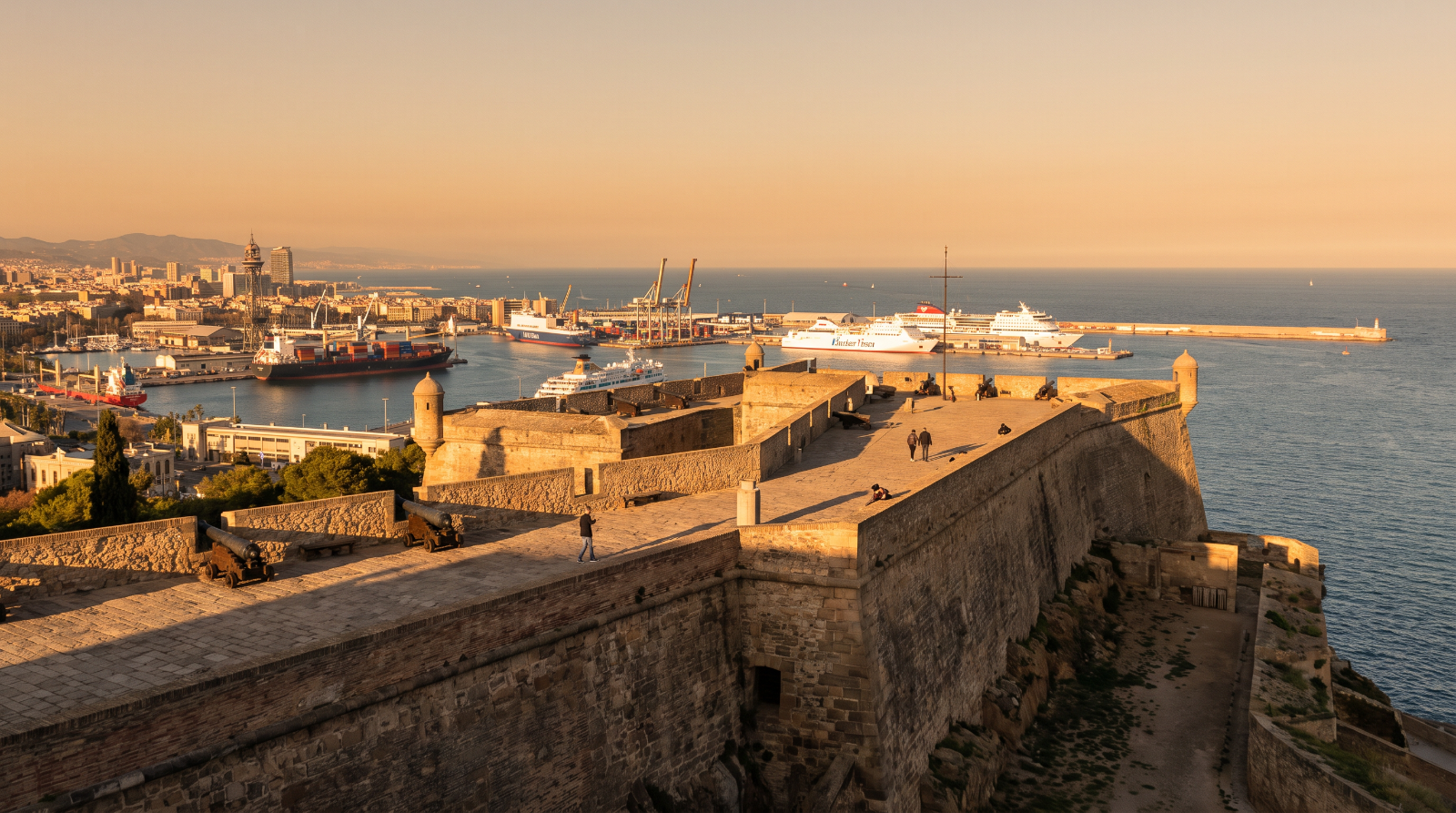
The Sea-Facing Wall
Spanning 155 meters along the seaward edge, this rampart offers views of the Port of Barcelona. It is a quiet spot to watch shipping traffic.
Peer over the stone edge to view the active cargo docks.
The Dark History of Barcelona's Hilltop Fortress
The hill above Barcelona has carried a fortress since 1640. During the Catalan Revolt, defenders raised a simple watchtower on Montjuïc's summit. What began as an earthwork bastion would become the stone stronghold that visitors to the montjuic cable car and castle still climb toward today. The structure grew hard and angular. Between 1751 and 1779, military engineer Juan Martín Cermeño redesigned it as a star fort, adding ramparts, a moat, and artillery platforms. In 1842, General Espartero turned its guns downhill and bombarded the city below, a moment residents never forgot. Its darker role followed. The fortress served as a military prison for more than a century, holding political detainees behind its walls. On 15 October 1940, Catalan president Lluís Companys was executed in its moat under Franco's regime. Anarchists, republicans, and dissidents passed through the same gates. For generations of Barcelonans, the citadel symbolized repression rather than defense. Ownership shifted in 2007, when the Spanish army ceded the site to the city. Barcelona reopened it as a cultural center and a space for public memory. Today the montjuic cable car and castle draws visitors to a monument that reads as both landmark and reckoning. Much of that history survives in plain sight. The angular bastions, the dry moat where Companys fell, and the thick seaward ramparts remain. A guided Barcelona castle tour still traces the garrison quarters and gun emplacements, where explanatory panels name the prisoners once held here.
Defenders raised the first watchtower on Montjuïc during the Catalan Revolt.
Engineer Juan Martín Cermeño began rebuilding the site as a star fort, completed by 1779.
General Espartero bombarded Barcelona from the fortress guns above the city.
Catalan president Lluís Companys was executed in the castle moat under Franco.
The Spanish army ceded the fortress to the city of Barcelona.
The castle operates as a cultural center and public memory site.
Insider Tips for Your Cable Car and Castle Visit
Planning your route and securing tickets in advance ensures a seamless experience when visiting Montjuïc's historic peak.
Know the Two Cable Cars
The Telefèric de Montjuïc runs along the hillside directly to the castle, while the Port Cable Car connects Barceloneta beach to Miramar. They require completely separate tickets and operate as independent transit networks.
Skip the Ticket Office Queue
Booking your tickets online in advance allows you to bypass the physical box office lines at the station. You can walk directly to the boarding turnstiles with your digital barcode.
Evaluate Mobility and Access
The Telefèric de Montjuïc offers fully wheelchair-accessible cabins with seating. The historic Port Cable Car is standing-room only and cannot accommodate larger mobility devices.
Use the Intermediate Stop
A round-trip ticket for the Telefèric de Montjuïc permits you to exit at the Mirador de l'Alcalde stop on the descent. You can explore the gardens and board again later without purchasing another ticket.
Note Separate Castle Admission
Cable car tickets only cover the aerial transit and do not grant entry to Montjuïc Castle. You must purchase a separate general admission ticket to enter the historic fortress grounds.
Plan for High Wind Closures
The Port Cable Car frequently closes when wind gusts exceed 40 kilometers per hour. The Telefèric de Montjuïc is far more stable and rarely suspends service due to wind conditions.
Check availability
FAQs about the montjuic cable car and castle
Everything you need to know about montjuic cable car and castle